 Compact
 1/2.3”
 4:3
4:3 Yes
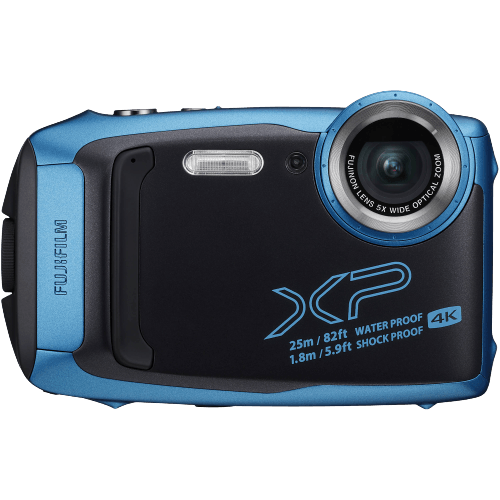
YesThe Fujifilm FinePix XP140 receives a score of 60/100 in the general specifications category. Announced on February 14, 2019, this compact camera has a launch price of $230. Measuring 110 x 71 x 28mm and weighing 207g (0.46lbs), the XP140 is a lightweight and portable option for photographers. Although its specifications are not groundbreaking in today’s market, the camera offers decent value for its price. The Fujifilm FinePix XP140 is a suitable choice for those seeking a budget-friendly, compact camera.
The Fujifilm FinePix XP140 receives a score of 55/100 for its optics. This camera features a 16-megapixel CMOS sensor with a 1/2.3″ sensor size, providing decent image quality. The aspect ratio is 4:3, which is standard for most cameras in this category.
One of the advantages of this camera is its shooting speed, which reaches 10 frames per second. This makes it suitable for capturing fast action scenes. The XP140 also comes with built-in image stabilization, ensuring sharp and blur-free images even when shooting handheld.
However, the camera’s lens mount is fixed, meaning users cannot change the lens to suit their needs. This might limit the versatility of the camera in certain situations. Additionally, the absence of a DXOMARK score for the sensor makes it difficult to compare the XP140’s performance with other cameras in the market.
Given these specifications, the Fujifilm FinePix XP140 offers decent optics, but it might not be the top choice for those seeking exceptional image quality or versatility.
 Yes
Yes 4K
4K Yes
YesThe Fujifilm FinePix XP140 has a video score of 83/100. This camera offers a maximum video resolution of 4K with dimensions of 3840 x 2160. The maximum video frame rate is 60fps, providing smooth and high-quality footage. The built-in time-lapse functionality adds to the versatility of the XP140’s video capabilities.
In the competitive market of today, the XP140’s video features hold up well. The 4K resolution and 60fps frame rate ensure that the camera can capture detailed and fluid videos, meeting the demands of most users. The time-lapse functionality is an added bonus that enhances the camera’s appeal.
The Fujifilm FinePix XP140 presents a strong option for those seeking high-quality video capabilities in a compact camera. Its impressive specifications and features make it a competitive choice in the current market.
 Yes
Yes Yes
Yes Yes
Yes Yes
Yes Yes
Yes Yes
YesThe Fujifilm FinePix XP140 boasts a feature score of 81/100, which reflects its competitive standing in the current market. With a 3-inch touchscreen display, this camera offers a screen resolution of 920,000 dots, providing sharp and clear images for users. Although it lacks a flip screen, the XP140 compensates for this with its connectivity options.
The absence of GPS functionality does not hinder the XP140, as it is equipped with both Wi-Fi and Bluetooth capabilities. These features enable easy sharing and transferring of images, making it a convenient choice for photographers on-the-go.
Taking into account the specifications and features of the Fujifilm FinePix XP140, it is evident that this camera holds its own in today’s market. Its combination of a high-resolution touchscreen, Wi-Fi and Bluetooth connectivity, and a solid feature score make it a strong contender for those seeking a reliable and user-friendly option.
 Yes
YesThe Fujifilm FinePix XP140 receives a storage and battery score of 27/100. This camera has one memory card slot and accepts SD, SDHC, and SDXC memory cards, with UHS-I compatibility. Additionally, it offers internal storage. The NP-45S battery provides a battery life of 240 shots and supports USB charging.
Compared to other cameras in today’s market, the XP140’s storage and battery specifications are modest. A single memory card slot and limited battery life of 240 shots may not be sufficient for those seeking extended shooting sessions or more storage flexibility. However, the USB charging feature adds convenience for on-the-go use.
Taking these factors into account, the Fujifilm FinePix XP140’s storage and battery performance is adequate for casual photographers but may not meet the needs of more demanding users.