
Canon EOS 60D vs Canon EOS 6D Mark II — Which Is Better?
Side by side47 specifications |
Canon · DSLR · 18 MP · APS-C · Full HD video
Canon EOS 60D
47
SCORE
|
Canon · DSLR · 26.2 MP · Full Frame · Full HD video
Canon EOS 6D Mark II
71
WINNER
|
|---|---|---|
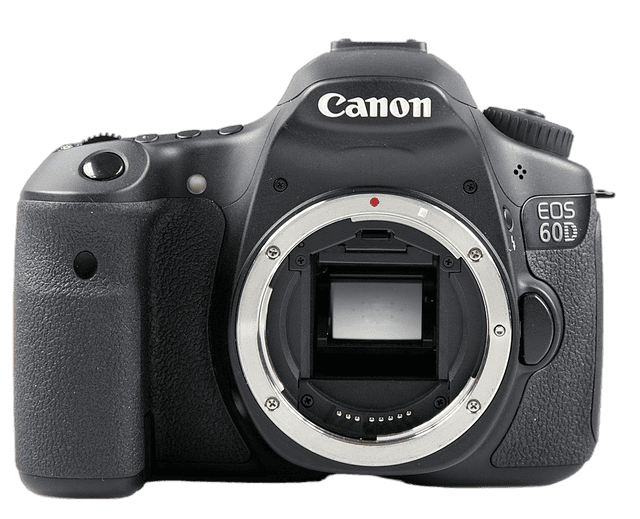 | 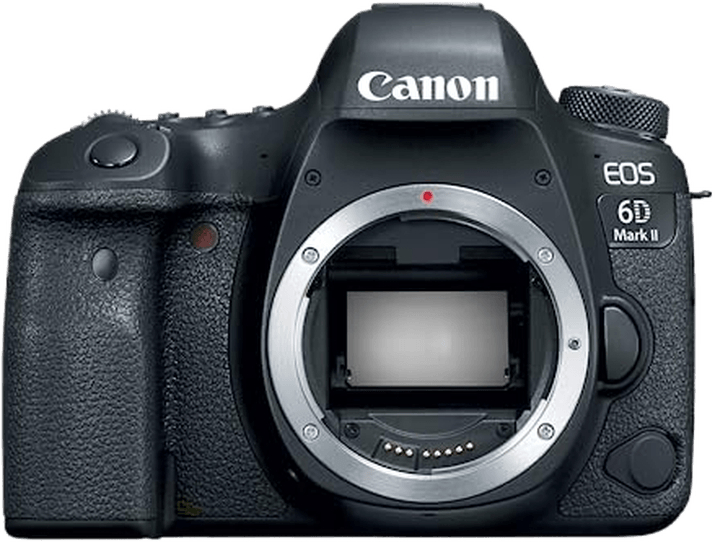 | |
| General | ||
Released ⓘRefers to the year this camera was officially made available for sale. |
2010 | 2017 |
Announcement date ⓘRefers to the date the manufacturer publicly announced the upcoming release and general specs of this camera. |
August 26, 2010 | June 29, 2017 |
| Camera type |  DSLR DSLR | DSLR |
| Camera size | 145 x 106 x 79 mm | 144 x 111 x 75 mm |
| Camera weight | 755 g | 453 g |
| Optics | 43/100 | 69/100 |
Read the Optics ComparisonCanon EOS 60D vs EOS 6D Mark II Overview and OpticsThe Canon EOS 6D Mark II outperforms the Canon EOS 60D in optics with a score of 69/100 compared to the 60D’s 43/100. Both cameras share similarities such as the CMOS sensor type, absence of image stabilization, and compatibility with Canon EF lenses. However, the 6D Mark II surpasses the 60D in several key specifications. The 6D Mark II has a higher megapixel count at 26.2, compared to the 60D’s 18 megapixels. This difference allows the 6D Mark II to capture more detail and produce higher resolution images. The 6D Mark II also has a faster shooting speed of 6.5 frames per second, compared to the 60D’s 5.3. This advantage enables the 6D Mark II to capture fast-moving subjects more effectively. Furthermore, the 6D Mark II boasts a superior sensor size with a full-frame sensor, while the 60D has an APS-C sensor. The larger sensor in the 6D Mark II contributes to better low-light performance and increased dynamic range. The 6D Mark II also has a more advanced processor, the Digic 7, compared to the 60D’s Digic 4, resulting in faster image processing and improved performance. The 60D does not have any significant advantages over the 6D Mark II in terms of optics. The lower score of the 60D reflects its inferior specifications compared to the 6D Mark II. Taking these factors into account, the Canon EOS 6D Mark II is the clear winner in terms of optics. Its higher megapixel count, faster shooting speed, larger sensor size, and more advanced processor make it a superior camera compared to the Canon EOS 60D. | ||
Megapixels ⓘThe higher the number of megapixels, the more detail the cameras sensor can capture. |
18 MP050 | 26.2 MP050 |
Image resolution ⓘImage resolution is measured in pixels and megapixels, width by height. The higher the number, the higher its resolution. |
5184 x 3456 | 6240 x 4160 |
Sensor type ⓘThe camera sensor captures light and records the image. Sensors vary in physical size, the number of pixels, and quality. |
CMOS | CMOS |
Sensor size ⓘThe sensor size contributes to the overall quality as well as the dynamic and tonal range a camera can capture. As a rule of thumb, the more surface there is to read the light, the more information it will capture. |
14.9 x 22.3 | 24 x 35.9 |
Sensor format ⓘRefers to the most commonly used sensor sizes. |
 APS-C APS-C |  Full Frame Full Frame |
Continuous shooting ⓘThe number of sequential frames per second the camera can write to the memory card when shooting in burst or continuous mode. |
5.3 fps045 | 6.5 fps045 |
Lens mount ⓘThe lens mount will tell you what type of lens range you can fit onto the camera body. Often the same camera company will have different lens ranges for different cameras. |
Canon EF-S | Canon EF |
Image processor ⓘThe image processor in the camera converts the information collected on the sensor for digital storage on the memory card. |
Digic 4 | Digic 7 |
Aspect ratio ⓘThe aspect ratio refers to the proportional difference between width and height. The most popular aspect ratios are 3:2 and 4:3. |
 3:2 3:2 | 3:2 |
Min ISO ⓘRefers to the lowest native (or 'base') ISO setting. Lower ISO are less sensitive to light but make a cleaner image. |
10030200 | 10030200 |
Max ISO ⓘRefers to the highest native (or 'base') ISO setting. Higher ISO is necessary for low-light situations or night photography, but higher ISOs often introduce grain or noise. |
128003003280000 | 400003003280000 |
Min ISO (expanded) ⓘExpanded (or extended) ISO is a digitally enhanced feature available on some cameras. It allows you to push beyond the native ISO range if necessary. |
5030200 | 5030200 |
Max ISO (expanded) ⓘExpanded (or extended) ISO is a digitally enhanced feature available on some cameras. It allows you to push beyond the native ISO range if necessary. |
128003003280000 | 1024003003280000 |
Minimum shutter speed ⓘThe minimum shutter speed will tell you the longest exposure your camera can take without using an external accessory. |
3044080 | 3044080 |
Max shutter speed ⓘThe maximum shutter speed tells you the length inside 1 second the camera will capture. These can sometimes be extended with accessories such as extra external batteries. |
800080032000 | 400080032000 |
Autofocus points ⓘAutofocus points show where the camera is focusing graphically as squares or brackets in Live View or on an electronic viewfinder. These points are also used for light meter readings. |
90300 | 450300 |
In-body stabilisation ⓘIn-body Stabilization means the camera has a certain technology embedded that counteracts camera shake. |
✗ | ✗ |
Viewfinder type ⓘThe viewfinder type is either electronic or optical. Electronic viewfinders will have a small screen in the viewfinder. Optical viewfinders will use prisms and mirrors to look through the lens. |
Optical (pentaprism) | Optical (pentaprism) |
| Viewfinder dots | N/A | N/A |
| Video | 43/100 | 57/100 |
Read the Video ComparisonCanon EOS 60D vs EOS 6D Mark II Video PerformanceThe Canon EOS 6D Mark II outperforms the Canon EOS 60D in video capabilities with a video score of 57/100, a 14-point advantage over the 60D’s score of 43/100. Both cameras share some common video specifications, such as Full HD video resolution and a maximum video dimension of 1920 x 1080. Additionally, they both have a maximum video frame rate of 30fps. The 6D Mark II’s higher video score reflects its superior features. One notable advantage is the built-in time-lapse functionality, which enables users to create stunning time-lapse videos without the need for additional equipment or software. This feature sets the 6D Mark II apart from the 60D, making it a more versatile choice for videographers. On the other hand, the 60D does not offer any significant advantages in video performance over the 6D Mark II. Both cameras share the same maximum video resolution, dimensions, and frame rate. The lack of built-in time-lapse functionality in the 60D further limits its video capabilities in comparison to the 6D Mark II. Given these factors, it is clear that the Canon EOS 6D Mark II is the superior choice for video performance. Its built-in time-lapse functionality and overall higher video score make it a more versatile and capable camera for videographers. The Canon EOS 60D, while still offering decent video quality, falls short in comparison due to its lack of time-lapse functionality and lower video score. | ||
Video ⓘIndicates if this camera is capable of recording video. |
 Yes Yes | Yes |
Max video resolution ⓘThe best resolution this camera can capture video in. Modern cameras can capture up to 8K video. |
 Full HD Full HD | Full HD |
Max video format ⓘVideo resolution measured by the greatest number of pixels possible in each frame, width by height. A higher resolution means more detail or clarity in your video. |
1920 x 1080 | 1920 x 1080 |
Max video frame rate ⓘHow many frames per second your video will capture. Most cameras have options for multiple frame rates, depending on the resolution you shoot in. For a general video, 24p or 30p is the standard, but more serious filmmakers may need a higher frame rate for creative effect. |
30 fps | 60 fps |
Timelapse built in ⓘA built in time-lapse mode will allow continuous shooting throughout a prolonged period of time to be compressed into a sped up video. |
No |  Yes Yes |
Video file format ⓘDifferent cameras can record in various video file formats. The File format you record in can impact how you edit and use the files. |
MOV | MP4, MOV |
| Features | 57/100 | 83/100 |
Read the Features ComparisonCanon EOS 60D vs EOS 6D Mark II Features and BenefitsThe Canon EOS 6D Mark II surpasses the Canon EOS 60D in terms of features, scoring 83/100 compared to the 60D’s 57/100. Both cameras share similarities in screen size and resolution, with 3-inch screens and a resolution of 1,040,000 dots. They also both possess flip screens, allowing for easier composition and shooting in various angles. The 6D Mark II excels with its additional features, such as a touchscreen, GPS, WiFi, and Bluetooth capabilities. The touchscreen enables easier and quicker navigation through menus and settings. GPS functionality allows for geotagging of images, which is useful for travel and landscape photographers. The inclusion of WiFi and Bluetooth offers convenience in transferring images to devices and remote control of the camera. Though the 60D lacks these features, it still serves as a solid camera for photography enthusiasts and those on a budget. It is worth noting that the 60D is often available at a lower price point than the 6D Mark II, making it a more accessible option for some users. When considering these points, the 6D Mark II proves to be the superior camera in terms of features. Its additional capabilities cater to a wider range of photographers and provide enhanced convenience and functionality. The 60D, while lacking these advanced features, remains a competent option for those seeking a more affordable camera. Ultimately, the choice between the two cameras depends on the individual’s needs and preferences. | ||
Builtin flash ⓘA built-in flash will often be positioned right above the lens. This will automatically pop up when you activate it. |
 Yes Yes | No |
External flash ⓘExternal flashes are often connected through a hot shoe at the top of a camera, or a cable at the side of the camera. |
 Yes Yes | Yes |
GPS ⓘGPS features in a camera will include location metadata to each of your photographs. |
No |  Yes Yes |
Weather sealing ⓘWeather sealing capabilities will give you more confidence when shooting in unfavourable conditions. |
 Yes Yes | Yes |
| Screen type | LCD | LCD |
Touch screen ⓘTouchscreen allows you to change camera settings and access menus with a swipe of your finger, instead of using buttons. |
No |  Yes Yes |
| Screen size | 3" | 3" |
Screen dots ⓘScreen dots indicate the resolution of the LCD screen by including each sub pixel. |
10400001150001500000 | 10400001150001500000 |
Flip screen ⓘA flip screen (or articulating screen) is a second screen which can flip out from the side or top of the camera. This rotating screen allows you more freedom to take photos at different angles. |
 Yes Yes | Yes |
Live view ⓘLive View feature allows you to see a continuous live video of what is being seen through your lens. |
 Yes Yes | Yes |
Wi-Fi ⓘBuilt-in Wi-Fi allows you to connect your camera and share images wirelessly. |
No |  Yes Yes |
Bluetooth ⓘBluetooth capabilities allow you wireless control of your camera with other external devices. |
No |  Yes Yes |
| Storage & battery | 45/100 | 45/100 |
Read the Storage & battery ComparisonCanon EOS 60D vs EOS 6D Mark II Storage and BatteryThe Canon EOS 60D and Canon EOS 6D Mark II both score 45/100 in storage and battery. They share similarities in their storage capacities, with each camera having one memory card slot and accepting SD, SDHC, and SDXC memory cards. However, the EOS 6D Mark II supports UHS-I compatible cards, which provide faster read and write speeds. The 6D Mark II has a slightly longer battery life, offering 1200 shots compared to the 60D’s 1100 shots. This difference is due to the 6D Mark II using the LP-E6N battery type, while the 60D uses the LP-E6 battery type. Neither camera offers USB charging. Despite the EOS 6D Mark II’s marginally better battery life and UHS-I compatibility, both cameras have nearly identical scores in storage and battery. Potential buyers should consider other factors, such as general specifications, optics, video, and features, when deciding between these two Canon models. | ||
| Memory card | SD / SDHC / SDXC | SD / SDHC / SDXC (UHS-I compatible) |
| Dual memory card slots | ✗ | ✗ |
| Battery type | LP-E6 | LP-E6N |
Battery life ⓘApproximately how long this cameras battery will last measured by how many photographs you will be able to take. |
1100 shots1505000 | 1200 shots1505000 |
| USB charging | ✗ | ✗ |