Product specifications and highlights restored from our saved catalogue records. The original article date and recommendations are unchanged.
If you’re ambitious, you’ll probably want a mirrorless model like the Canon EOS R8. But DSLRs like the Canon EOS 6D Mark II or any one of the Rebel models are still popular.
If your budget doesn’t stretch that far, you can always look at compact cameras like the Canon PowerShot G7 X Mark III. Or a bridge camera like the Canon PowerShot SX70 HS is handy for wildlife photography. Read on to find the best one for you!
Best Canon Cameras for Beginners
Let’s have a quick look at your beginner camera options. There’s everything from mirrorless cameras and DSLRs… to superzooms (bridge cameras) and point-and-shoot cameras.
- Canon EOS R8
- Canon EOS RP
- Canon EOS R10
- Canon EOS M50 Mark II
- Canon EOS 90D
- Canon EOS 6D Mark II
- Canon EOS Rebel SL3 / 250D
- Canon EOS Rebel T8i / 850D
- Canon EOS 77D
- Canon PowerShot G7 X Mark III
- Canon PowerShot SX70 HS
11 Best Canon Cameras for Beginners in Detail!
Now we look closer at the best Canon cameras, including all their specs.
Canon EOS R8
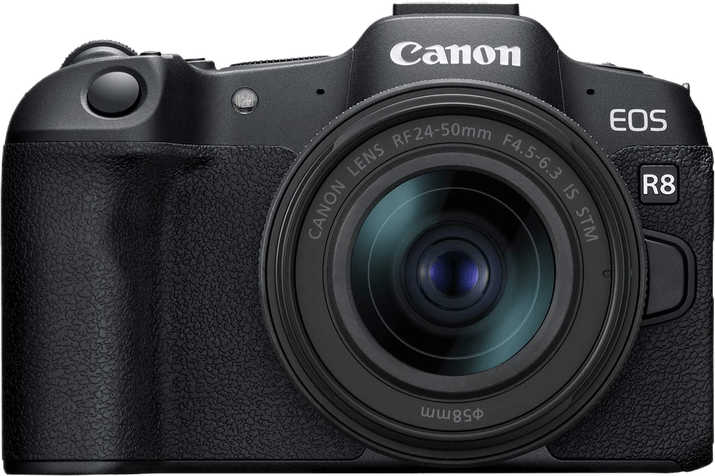
- Resolution
- 24 MP
- Sensor
- Full Frame
- Video
- 4K
- Weight
- 461 g
Highlights
- Canon's lightest full-frame camera body
- Pre-shooting buffer of 0.5 seconds
- Fully articulating touchscreen
- 10-bit HDR video and 40 fps burst rate
- Oversampled 4K/60p video
Trade-Offs
- No image stabilization
- No autofocus joystick
- Low-resolution electronic viewfinder
- Only one memory card slot
- Relatively short battery life
Canon EOS RP
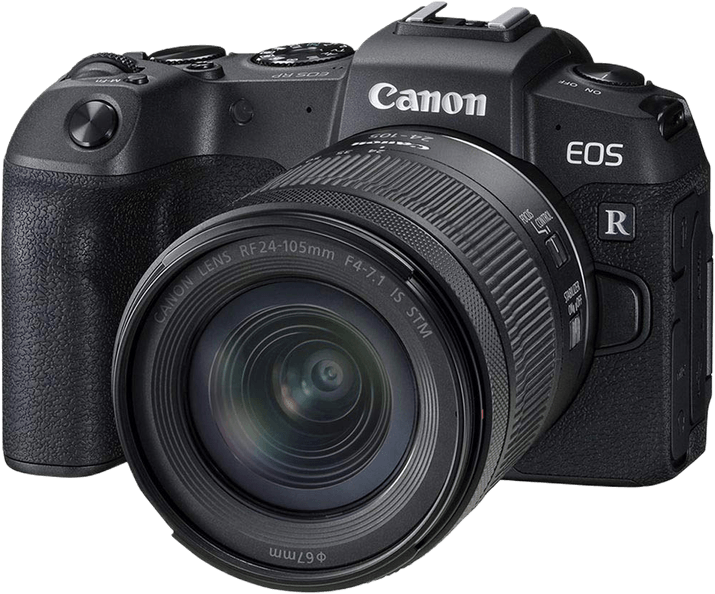
- Resolution
- 26 MP
- Sensor
- Full Frame
- Video
- 4K
- Weight
- 440 g
Highlights
- Affordable full-frame mirrorless
- Lightweight and easy to handle
- Macro stacking and time-lapse
- Convenient Wi-Fi and Bluetooth
- Nice 4K video performance
Trade-Offs
- 5 fps max burst is slow compared to competitors
- Relatively poor 250-shot battery life
- Doesn't function while charging
- 4K video is cropped 1.6x
Canon EOS R10
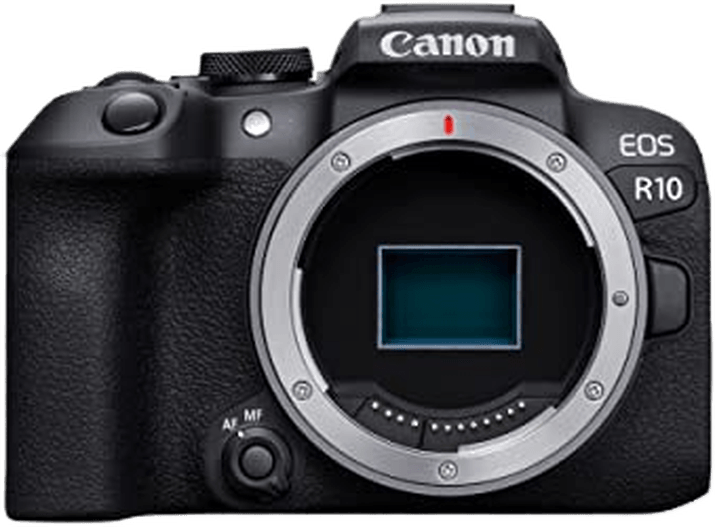
- Resolution
- 24 MP
- Sensor
- APS-C
- Video
- 4K
- Weight
- 426 g
Highlights
- Powerful APS-C sensor
- Professional-standard Dual-Pixel AF
- 23 fps burst speed (electronic shutter)
- Compact and lightweight camera body
- Excellent video quality with 4K options
Trade-Offs
- No image stabilization when taking photos or recording video
- Only has one slot for memory cards
- Body has no weather sealing
- 4K/60p video is cropped
Canon EOS M50 Mark II
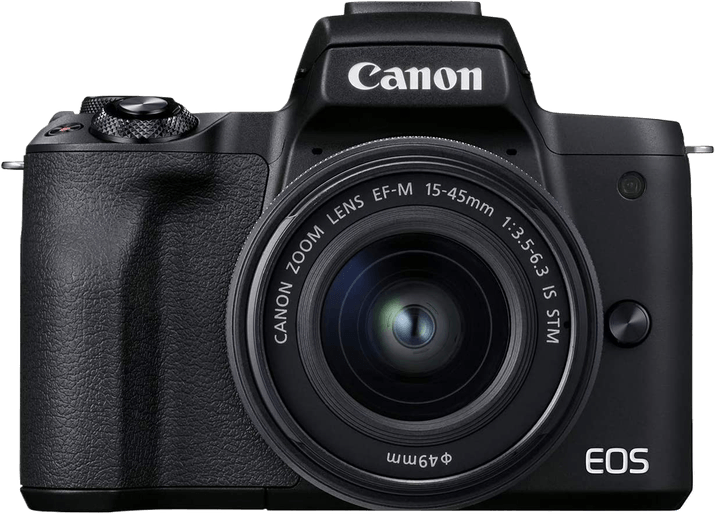
- Resolution
- 24 MP
- Sensor
- APS-C
- Video
- 4K
- Weight
- 387 g
Highlights
- Strong sensor resolution
- 4K and Full HD video options
- Time-lapse recording
- External mic port
- Webcam functionality
Trade-Offs
- 4K video is cropped
- No environmental sealing
- No sensor-shift image stabilization
- Disappointing battery life
Canon EOS 90D
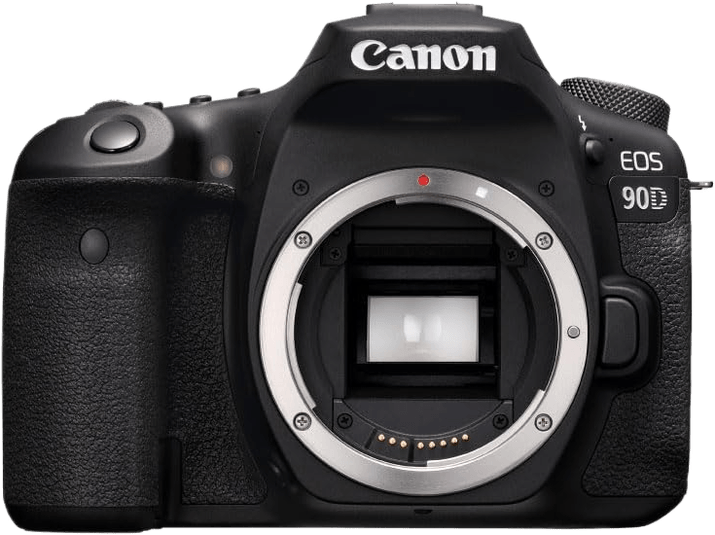
- Resolution
- 33 MP
- Sensor
- APS-C
- Video
- 4K
- Weight
- 701 g
Highlights
- Excellent 32.5 MP APS-C sensor
- Dual Pixel AF with eye detection
- Decent frame rate of 10 fps
- Good, 1,300-shot battery life
- Live View and 4K/30p Ultra HD video
Trade-Offs
- Unreliable autofocus when using the optical viewfinder
- 4K video has a soft focus
- No in-body image stabilization
- Limited video codecs and frame rates
Canon EOS 6D Mark II
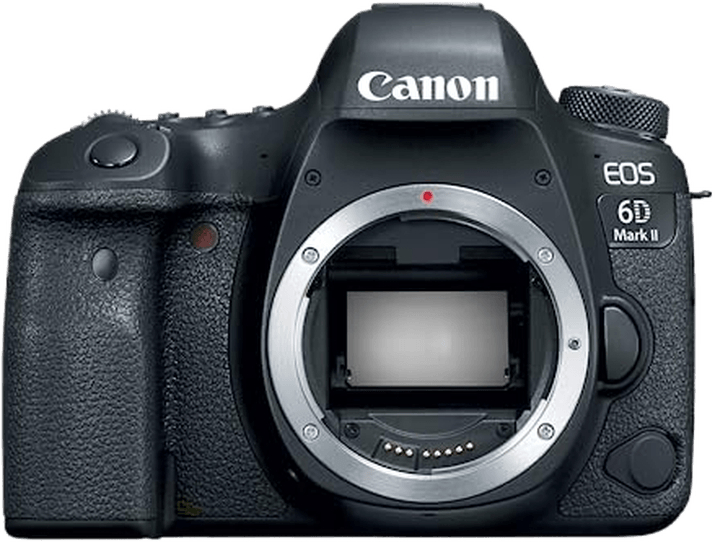
- Resolution
- 26.2 MP
- Sensor
- Full Frame
- Video
- Full HD
- Weight
- 453 g
Highlights
- Fantastic image quality
- Impressive 45-point AF system
- Built well and nice to handle
- Handy built-in Wi-Fi and GPS
Trade-Offs
- Low dynamic range
- Relatively limited video capabilities
- Only one memory card slot
- No USB charging
Canon EOS Rebel SL3 / 250D
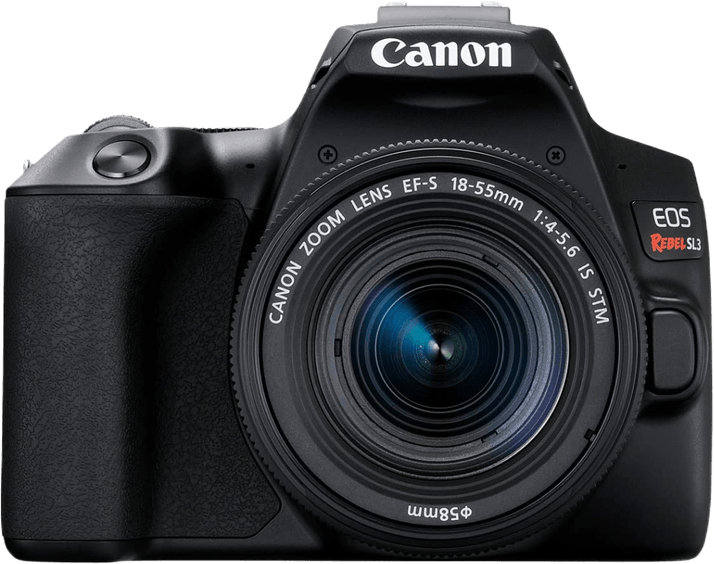
- Resolution
- 24 MP
- Sensor
- APS-C
- Video
- 4K
- Weight
- 449 g
Trade-Offs
- Only 9 autofocus points
- Lacks in-body image stabilization
- No USB charging
- No weather sealing
- 1.7x 4K crop factor
Canon EOS Rebel T8i / 850D
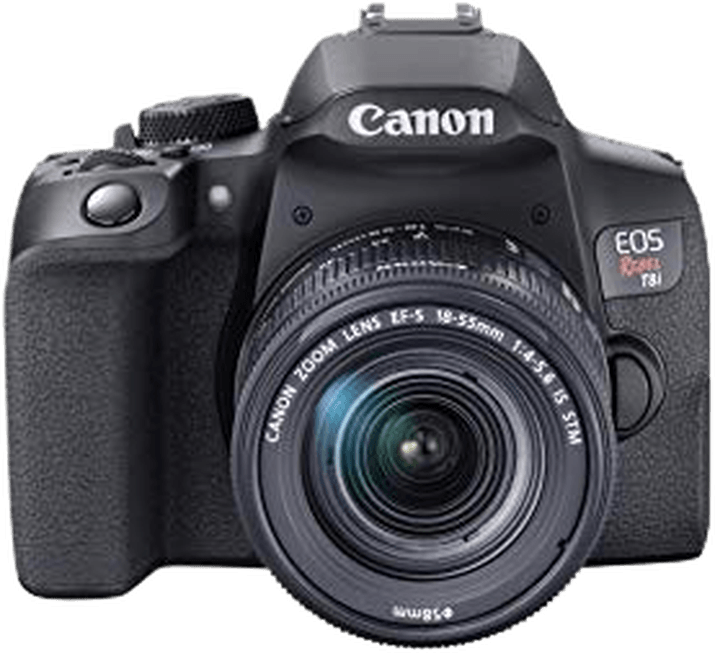
- Resolution
- 24 MP
- Sensor
- APS-C
- Video
- 4K
- Weight
- 515 g
Highlights
- Excellent image quality
- Face and eye-detection AF
- Great ISO range and low-light performance
- 4K/25p and Full HD/120p video
- Webcam functionality and remote shooting with smartphone
Trade-Offs
- Fiddly control dials
- Less reliable AF in video mode
- Small optical viewfinder display
- Cropped 4K video
Canon EOS 77D
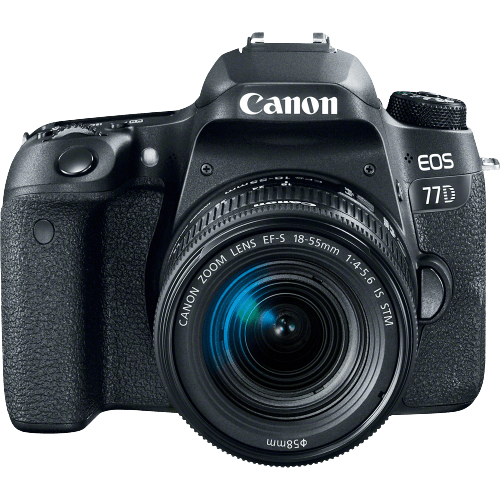
- Resolution
- 24.2 MP
- Sensor
- APS-C
- Video
- Full HD
- Weight
- 765 g
Highlights
- Fast, accurate, 45-point Dual Pixel AF
- 5-axis image stabilization to help reduce camera shake
- Excellent Live View performance
- Good ergonomics and handling
- Easy Wi-Fi and Bluetooth connections
Trade-Offs
- Unreliable intelligent AF subject tracking and recognition
- A slow burst rate
- A small viewfinder
- Plasticky build, no weather-sealing
- No 4K video option
Canon PowerShot G7 X Mark III
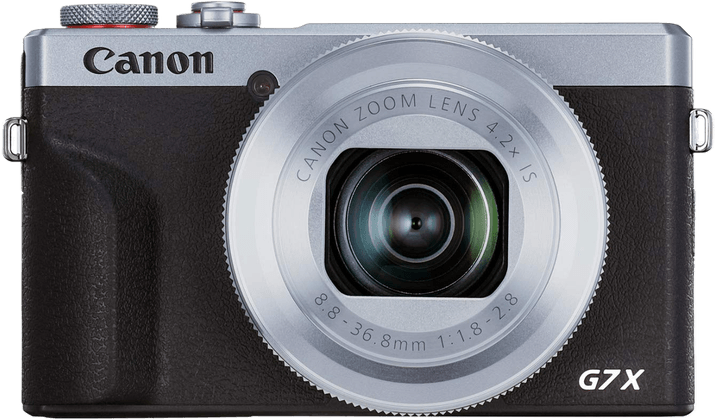
- Resolution
- 20 MP
- Sensor
- 1"
- Video
- 4K
- Weight
- 304 g
Highlights
- A high dynamic range
- Fast continuous shooting speeds
- Stylish design
- Pocket-sized body
- Flip-up rear LCD touchscreen
- Live-streaming compatible
Trade-Offs
- Soft focus at wider focal lengths
- No subject tracking in continuous shooting mode
- No electronic viewfinder
- Weak battery life for a compact
- 10 minute 4K recording limit
Canon PowerShot SX70 HS
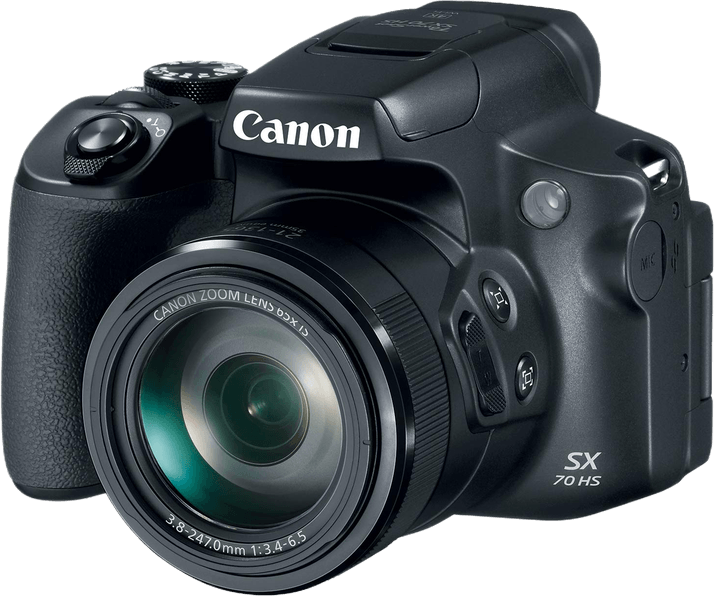
- Resolution
- 20 MP
- Sensor
- 1/2.3”
- Video
- 4K
- Weight
- 608 g
Trade-Offs
- Slow maximum continuous shooting
- No touchscreen
- No hot shoe for attaching accessories
- No USB charging
- Cropped 4K video
Our Verdict
If you’re looking for a Canon beginner camera, it has to be said that mirrorless cameras are gradually replacing DSLRs. The latest models, like the Canon EOS R8, offer a great entry point. And more and more are coming out each year.
But the 90D and 6D Mark II are still good cameras. And the Canon EOS Rebel series is very popular and affordable. Some people just prefer shooting with a lag-free optical viewfinder. So it’s up to you to decide what suits you best.
If you’re looking for a budget option, Canon produces several compact and bridge cameras in its PowerShot range. The best ones are probably the PowerShot G7 X Mark III and the PowerShot SX70 HS.
Common FAQs and Buying Guide
We answer questions about Canon cameras for beginners to help you buy the right one.
What Is the Best Camera Type for Beginners?
If you want something better than a smartphone or point-and-shoot, mirrorless cameras are best for beginners. They’re usually light and compact, with capable AF systems and decent burst rates.
But if you prefer an optical viewfinder, you can always opt for a DSLR. The 90D offers good resolution. And its AF system even provides face detection while using the optical viewfinder.
Otherwise, there is the 6D Mark II or the Rebel cameras, which are very popular.
Is Canon Good for Beginners?
Yes. Beginners will be impressed by the image quality and color rendition of Canon cameras. And most people also like their comfortable grips. Plus, full frame DSLRs and mirrorless cameras are now aimed at beginners.
Beginners will also like features such as fully articulated LCD screens, Dual Pixel AF, and Wi-Fi and Bluetooth. Canon is the biggest camera manufacturer in the world. And there is something for everyone.

Is Canon or Nikon Better for Beginners?
There’s not much to choose between Canon and Nikon. But Canon’s Guide mode is handy if you’re an absolute beginner wanting to learn on the job.
And the popularity of Canon cameras for beginners worldwide also means they’re easy to get hold of and repair if necessary!
Both Canon and Nikon offer a full range of digital cameras for beginners. This includes compact cameras, bridge cameras, DSLRs, and mirrorless cameras.
Is Canon Rebel Good for Beginners?
Yes, it’s aimed at beginners. They’re compact, lightweight, and affordable but still offer decent functionality. Rebel models are comfortable to hold with a user-friendly touchscreen interface and a vari-angle screen.
The Rebel series is an incredibly popular range of beginner Canon cameras. The market is shifting away from DSLRs and towards mirrorless cameras. But DSLRs are still popular in North America and Europe.
The main downside is the lack of eye detection with the optical viewfinder. You also have to bear in mind the lack of an upgrade path as more and more DSLR models are discontinued.
What Does EOS stand for With Canon Cameras?
EOS stands for Electro-Optical System. This is Canon’s brand name for its range of mirrorless and DSLR cameras with interchangeable lenses. Every model in that range has the EOS prefix. Read our article on Canon naming for more.
It’s not used for Canon’s compact and bridge cameras, which fall under the PowerShot label.
If you’re not sure which camera to choose, don’t fear! You can check our guides on the best Canon cameras for sports photography, the best Canon portrait camera, or the best Canon mirrorless for video for more inspiration! If you’re not sure about the brand, read our article discussing Canon vs Sony mirrorless or Fujifilm vs Canon cameras next!